Multimodal Anomaly Detection Platform
Early warning system for hospitals, factories, and wearable fleets
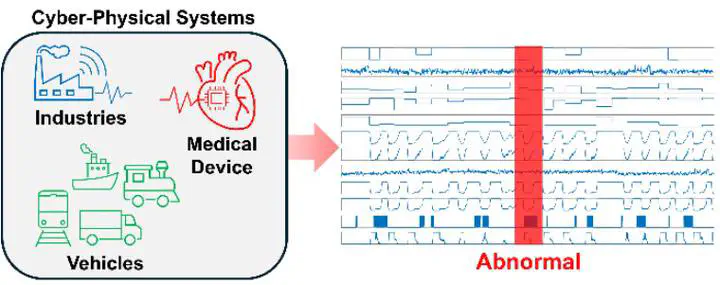 Unified dashboard showing cross-sensor anomaly alerts in a smart ward.
Abstract
To ensure safety in smart hospitals and industrial labs, we built a multimodal anomaly detection platform that monitors RGB-D cameras, thermal feeds, audio sensors, and biomedical wearables. The system is privacy-aware—it converts raw inputs into latent embeddings on-site, then shares only anomaly scores and short textual explanations with caregivers.
Technical Highlights
- Self-supervised pretraining with contrastive and masked reconstruction tasks for each modality
- Cross-modal graph attention that correlates patient posture, equipment usage, and biosignal trends
- Edge deployment options leveraging NVIDIA Jetson, ARM microcontrollers, and neuromorphic co-processors
- Human-in-the-loop tooling so clinicians can label new events and adapt thresholds quickly
Impact
- Reduced false alarms in remote ICU pilots by combining DVS privacy cameras with wearable ECG signals
- Provided anomaly datasets for coursework, enabling students to experience end-to-end detection pipelines
- Created reusable APIs that other BCML projects (e.g., Nailfold Capillaroscopy, patient monitoring) can plug into for quality assurance

Dongwook Kwon
Researcher, Suresoft Technologies Inc.
His research interests include deep learning, anomaly detection algorithm, and computer vision.

Jaeyong Kim
MS Student
His research interests include computer vision, large language models, and time series analysis.


Cheolsoo Park
Professor
His research interests include machine learning, adaptive signal processing, computational neuroscience, and wearable technology.