Abstract
A low level of vigilance is one of the main reasons for traffic and industrial accidents. We conducted experiments to evoke the low level of vigilance and record physiological data through single-channel electroencephalogram (EEG) and electrocardiogram (ECG) measurements. In this study, a deep Q-network (DQN) algorithm was designed, using conventional feature engineering and deep convolutional neural network (CNN) methods, to extract the optimal features. The DQN yielded the optimal features: two CNN features from ECG and two conventional features from EEG. The ECG features were more significant for tracking the transitions within the alertness continuum with the DQN. The classification was performed with a small number of features, and the results were similar to those from using all of the features. This suggests that the DQN could be applied to investigating biomarkers for physiological responses and optimizing the classification system to reduce the input resources.

Woojoon Seok
Researcher, Samsung DS
His research interests include biomedical signal processing and machine learning algorithms.

Minsoo Yeo
Software Engineer, DRAX, Department of Technology Research Center
His research interests include biomedical signal processing and embedded software.
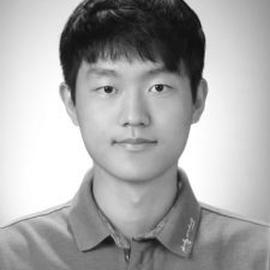
Heejun Lee
PhD Student, University of Groningen
His research interests include biomedical signal processing and wearable IT.

Taeheum Cho
Researcher, Modnbio
His research interests include Internet of Things and machine learning algorithms.

Cheolsoo Park
Professor
His research interests include machine learning, adaptive signal processing, computational neuroscience, and wearable technology.