Designing a Remote Photoplethysmography-Based Heart Rate Estimation Algorithm During a Treadmill Exercise
Abstract
Remote photoplethysmography is a technology that estimates heart rate by detecting changes in blood volume induced by heartbeats and the resulting changes in skin color through imaging. This technique is fundamental for the noncontact acquisition of physiological signals from the human body. Despite the notable progress in remote-photoplethysmography algorithms for estimating heart rate from facial videos, challenges remain in accurately assessing heart rate during cardiovascular exercises such as treadmill or elliptical workouts. To address these issues, research has been conducted in various fields. For example, an understanding of optics can help solve these issues. Careful design of video production is also crucial. Approaches in computer vision and deep learning with neural networks can also be applied. We focused on developing a practical approach to improve heart rate estimation algorithms under constrained conditions. To address the limitations of motion blur during high-motion activities, we introduced a novel motion-based algorithm. While existing methods like CHROM, LGI, OMIT, and POS incorporate correction processes, they have shown limited success in environments with significant motion. By analyzing treadmill data, we identified a relationship between motion changes and heart rate. With an initial heart rate provided, our algorithm achieved over a 15 bpm improvement in mean absolute error and root mean squared error compared to existing methods, along with more than double the Pearson correlation. We hope this research contributes to advancements in healthcare and monitoring.
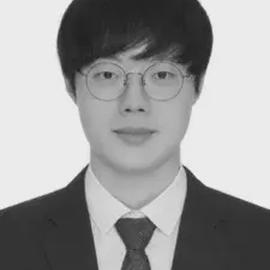
Yusang Nam
Software Engineer, DRAX
His research interests include computer vision and reinforcement learning.

Junghwan Lee
PhD Student
His research interests include machine learning and deep learning algorithms.
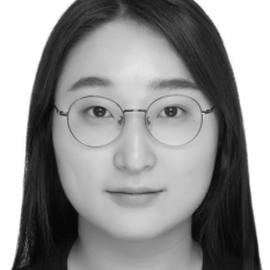
Jihong Lee
Researcher, Kwangwoon University
Her research interests include bio-medical signal processing, reinforcement learning and deep learning algorithms.
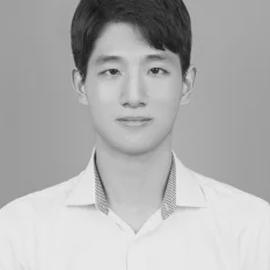
Hyuntae Lee
MS Student
His research interests include computer vision, machine learning algorithms, and remote photoplethysmography.
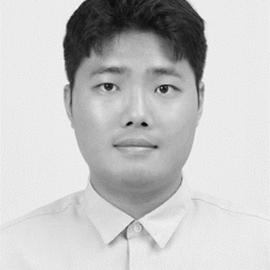
Dongwook Kwon
Researcher, Suresoft Technologies Inc.
His research interests include deep learning, anomaly detection algorithm, and computer vision.

Minsoo Yeo
Software Engineer, DRAX, Department of Technology Research Center
His research interests include biomedical signal processing and embedded software.

Cheolsoo Park
Professor
His research interests include machine learning, adaptive signal processing, computational neuroscience, and wearable technology.